Audisankara College of Engineering & Technology

About us
Department of Mechanical Engineering
ME Home
ME Home
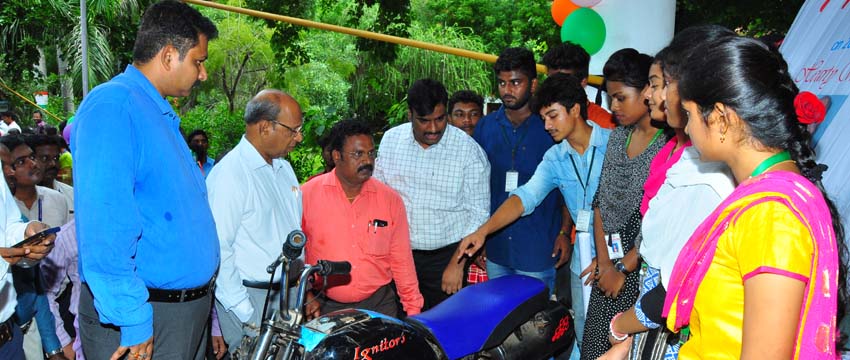
Mechanical Engineering is a discipline of engineering that applies the principles of engineering, physics, and materials science for the analysis, design, manufacturing and maintenance of mechanical systems. It is the branch of engineering that involves the production and usage of heat and mechanical power for the design, production and operation of machines and tools. Established in the year 2014, the department offers B.Tech. Program in Mechanical with an intake of 30
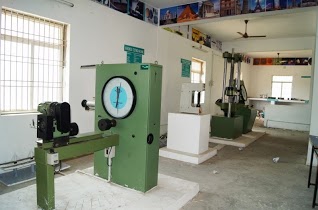
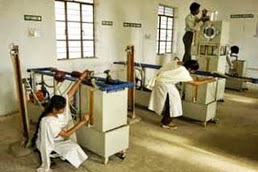
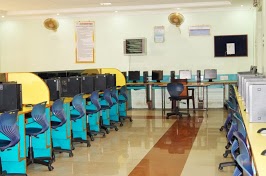
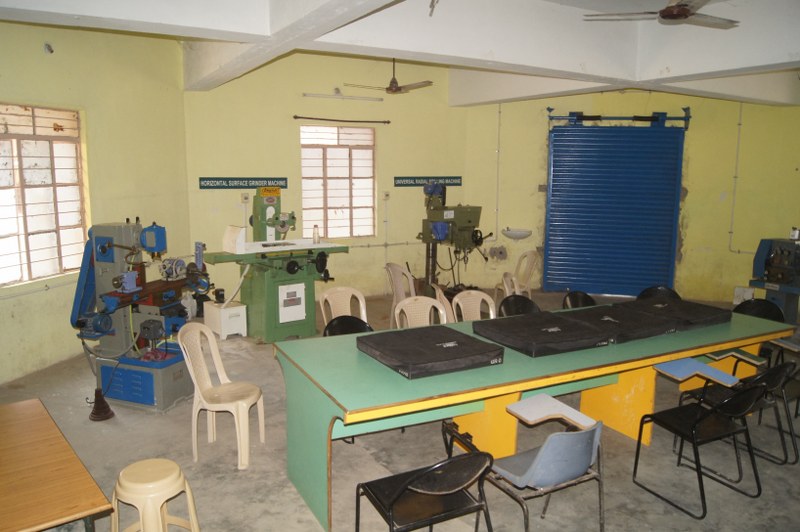
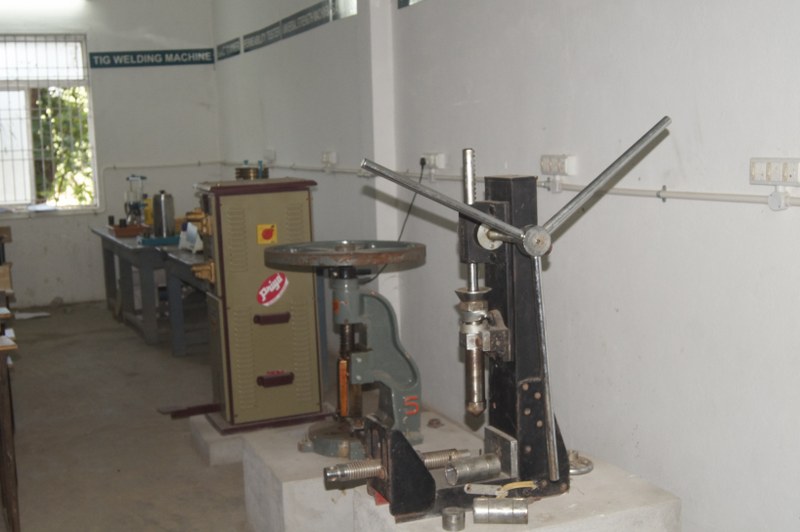
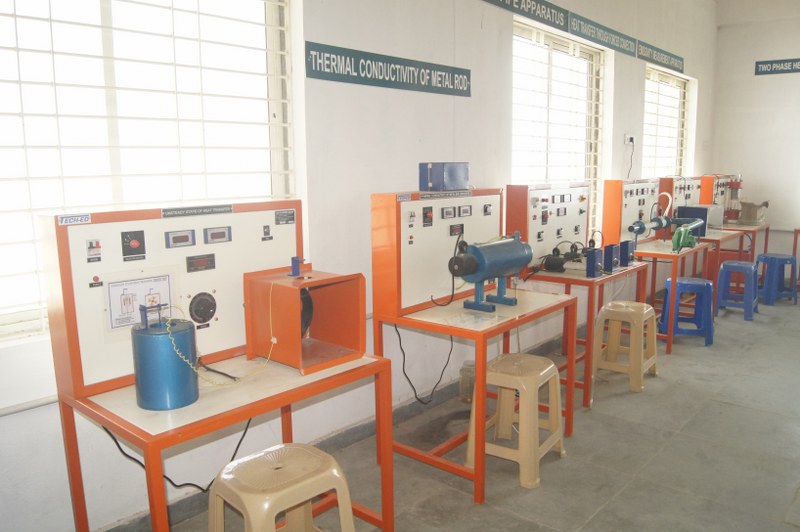
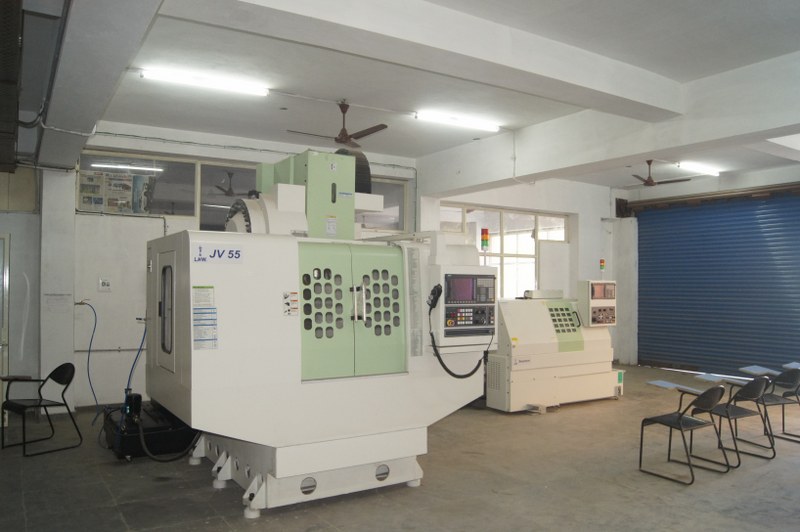
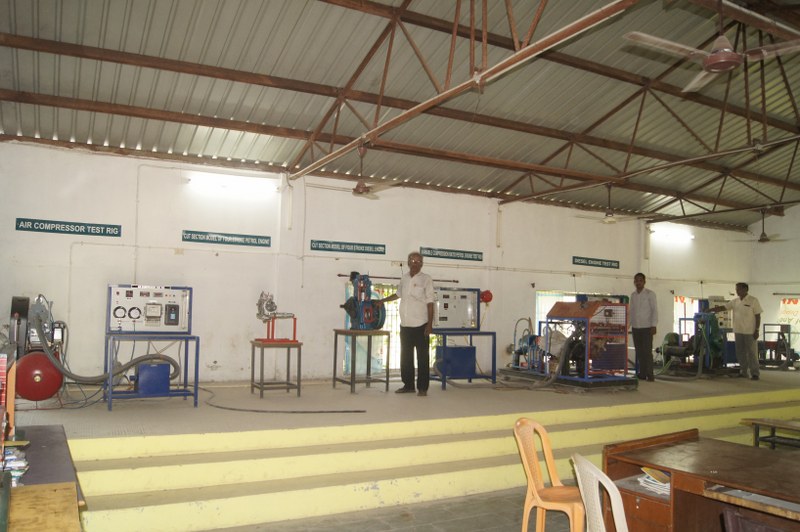
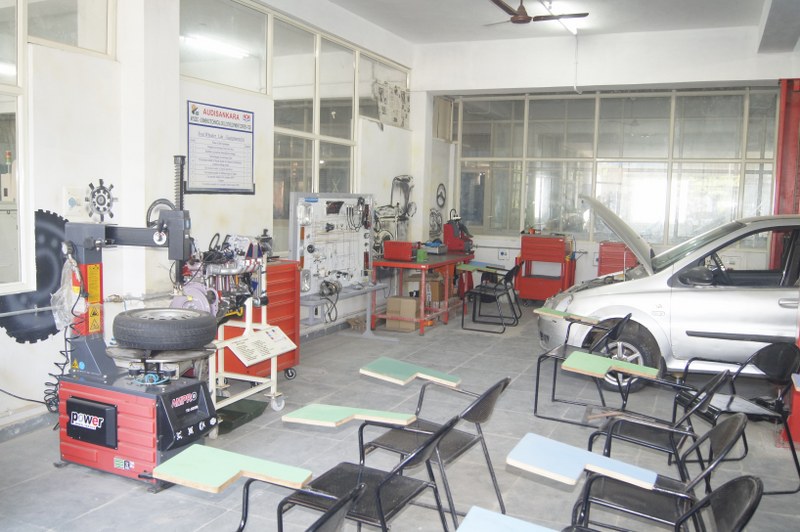
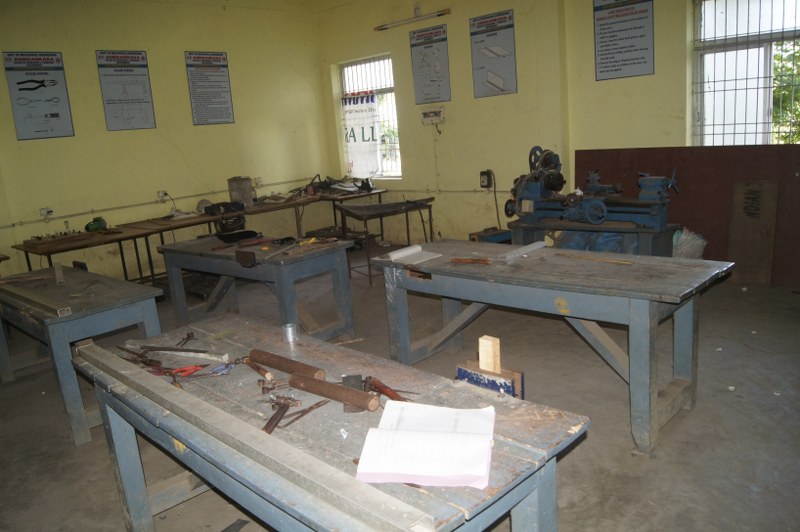
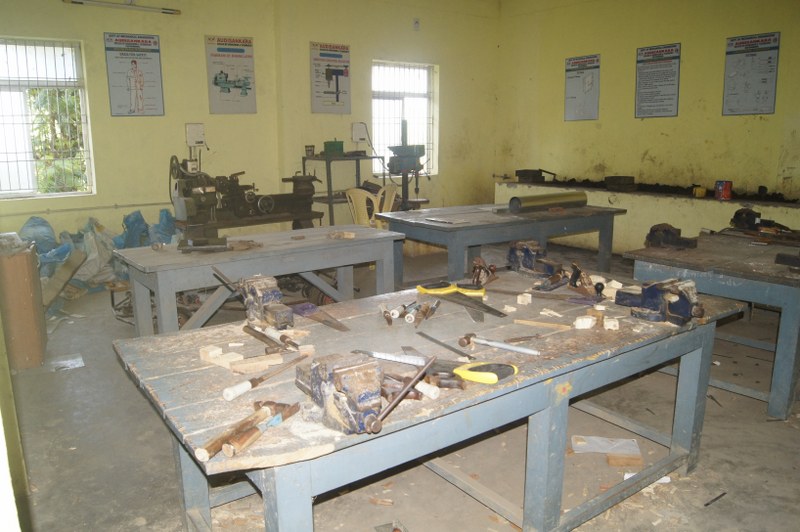
The Department has 09 faculty including 3 professors with Ph.D. having vast experience in both industry and academia. The department has well-equipped state-of-the-art modern laboratories to give hands-on experience to the students for extensive expertise for future industrial and academic needs. This includes metallurgy and material science lab, strength of materials lab, production technology lab, hydraulic machines lab, thermal engineering lab, heat transfer lab, Instrumentation and control systems lab, Computer-Aided Design and Manufacturing lab, and Production Drawing lab. The labs offer students to work on a wide range of advanced software packages such as MATLAB, NASTRAN, ADAMS, ANSYS, Hyper works, Solid Works, Unigraphics NX, CATIA, and CADEM
Career Opportunities
Our Students have obtained placement in prestigious companies including international companies like ISUZU, Green Tech, NelCast, TCS, Rane Engine Values , TVS Brakes India Ltd, and Hyundai. Our students got placement in both central and state government jobs in Railways, DRDO, ISRO and many more.
Industrial Connections:
ISUZU, Green Tech, NelCast, Rane Engine Values, TVS Brakes India Ltd ; Marquee companies such as DRDL, HMT, CYENT, Automotive Robotics, Mediqip, Envirotech, Hyderabad Dies and Moulds and MTE In
Vision & Mission
Vision
To develop competent and creative world class Mechanical Engineers who use their talents to achieve the excellence.
Mission
M1: To provide the students qualitative technical knowledge and nurture their creativity in the field of Mechanical Engineering through conducive and creative learning environment.
M2: To impart highest quality education to the students to build their capacity and honing their skills to make them globally competitive Mechanical Engineers
M3: To enhance the student’s ability to upgrade the latest technologies to be utilized for the welfare of the society.
Educational Objectives & Outcomes
Program Educational Objectives(PEOs) |
|||
PEO1:Demonstrate their skills in technical profession and higher education by using the acquired knowledge in Mathematics, Science and fundamentals of Engineering. PEO2:Analyze the real-life problems and propose sustainable design solutions for specific needs through applications of core disciplines. PEO3:Recognize the ethical responsibility as engineers and judiciously serve their peers, employers & society for the benefit of all. |
|||
Program Specific Outcomes (PSOs) |
|||
PSO1:Apply principles and concepts pertaining to Fundamental sciences and Mechanical Engineering in solving problems of practical interest in sub domains of Manufacturing, Thermal, Design and Management Sciences. PSO2:Ability to absorb, analyze, demonstrate and maintain latest developments in Mechanical Engineering and allied fields. PSO3:Utilize self-education to develop lifelong learning to consider and adapt global and societal contexts to propose engineering solutions. |
|||
Program Outcomes |
|||
PO1:Engineering knowledge: Apply the knowledge of mathematics, science, engineering fundamentals, and an engineering specialization to the solution of complex engineering problems. PO2:Problem analysis: Identify, formulate, review research literature, and analyze complex engineering problems reaching substantiated conclusions using first principles of mathematics, natural sciences, and engineering sciences. PO3:Design/development of solutions: Design solutions for complex engineering problems and design system components or processes that meet the specified needs with appropriate consideration for the public health and safety, and the cultural, societal, and environmental considerations. PO4:Conduct investigations of complex problems: Use research-based knowledge and research methods including design of experiments, analysis and interpretation of data, and synthesis of the information to provide valid conclusions. PO5:Modern tool usage: Create, select, and apply appropriate techniques, resources, and modern engineering and IT tools including prediction and modeling to complex engineering activities with an understanding of the limitations. PO6:The engineer and society: Apply reasoning informed by the contextual knowledge to assess societal, health, safety, legal and cultural issues and the consequent responsibilities relevant to the professional engineering practice. PO7:Environment and sustainability: Understand the impact of the professional engineering solutions in societal and environmental contexts, and demonstrate the knowledge of, and need for sustainable development. PO8:Ethics: Apply ethical principles and commit to professional ethics and responsibilities and norms of the engineering practice. PO9:Individual and team work: Function effectively as an individual, and as a member or leader in diverse teams, and in multidisciplinary settings. PO10:Communication: Communicate effectively on complex engineering activities with the engineering community and with society at large, such as, being able to comprehend and write effective reports and design documentation, make effective presentations, and give and receive clear instructions. PO11:Project management and finance: Demonstrate knowledge and understanding of the engineering and management principles and apply these to one's own work, as a member and leader in a team, to manage projects and in multidisciplinary environments. PO12:Life-long learning: Recognize the need for, and have the preparation and ability to engage in independent and life-long learning in the broadest context of technological change. |
|||
Academic Calender
CO-PO-PSO Mapping
ME BoS Members
| S.No | Name of the Member | Designation | Role of the BoS |
|---|---|---|---|
| 1 | Dr. P. Michael Joseph Stalin | Professor & HOD | Chairman |
| 2 | Dr. G. Amba Prasad | Professor, Mechanical Engineering Dept, NIT Warangal | Member |
| 3 | Dr. B. Anjaneya Prasad | Professor, Board of Studies Chairman, JNTUH, Hyderabad | Member |
| 4 | Dr. V. Venugopal Reddy | Professor & Head, Dept. of Mechanical Engineering, JNTUA College of Engineering, Pulivendula | Member |
| 5 | Dr. Rajendra Prasad | Professor | Member |
| 6 | Mr.. Vemaiah | Associate Professor | Member |
| 7 | Mr. K. Abraham | Associate Professor | Member |
| 8 | Mr. A. Guru Pradeep | Assistant Professor | Member |
| 9 | Mr. N. Sudharshan Reddy | Sr. General Manager & Plant Head, NELCAST, Nellore | Member |
| 10 | Mr. D. Vamsi | Infosys, Software Engineering, Mysore | Member |
Laboratories
|
|
|
|
|
|
|
|
|
|
|
|
|
|
|
|
R20 Regulations & Syllabus
R20 Regulations & Syllabus
Association(MESSA)
MESAA
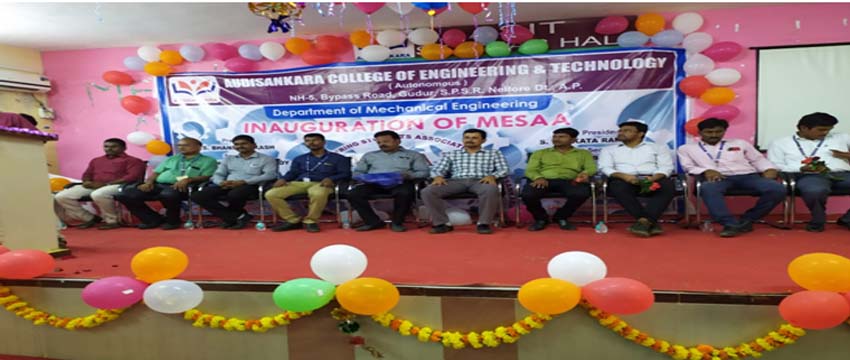
Mechanical engineering association with an interesting title MESAA: Mechanical Engineering Students association of Audisankara was inaugurated on 10th Sept.2015 at 10:30 am at Sir CV Raman Hall, ASCET in a grand and pompous manner. The event was graced by the augment presence of Mr.N.Sudarsana Reddy Garu, General Manager,Adminstration NELCAST limited guduru,who was the chief guest of the event Dr.M.R.Kodali garu,Dean Academics ASCET,Prof A.V.S.Sridhar garu,HOD,Dept.of mechanical.Balaji Institute of engineering& Managements Studies, and Prof. K.abraham Garu, I/c HOD Dept.of mechanical,ASCET. The chief guest, of Mr.N.Sudarsana Reddy Garu, speaking on the occasion, he instated Mechanical Engineering Association aims to maintain the high level of interaction existing between the students and the faculty members: to organize technical section, guest lectures, work shops, seminars, conferences and contest through a close tie up with the industry to play a pivotal role in the developments of students as engineers by various our curriculum and extracurricular activities.
Professional Body Members(MESSA)
| S.No | Regd.No | Name of the Student | Desigination |
|---|---|---|---|
| 1 | 16G21A0338 | S.Bhanuprash | President |
| 2 | 17G21A0341 | S. Venkataramana | Vice-President |
| 3 | 17G25A0312 | Y.V.Manoj kumar | Secretary |
| 4 | 17G21A0308 | D.Baba Sai | Joint Secretary |
| 5 | 17G25A0302 | E.Pranavindra | Treasurer |
| 6 | 16G21A0345 | T.Lokesh | Treasurer |
| 7 | 17G21A0335 | N.Teja | Assoc. Treasurer |
ME Roll of Honour
| S.No | Year | Name of the Student | Regd.No | Percentage |
|---|---|---|---|---|
| 1 | 2014-18 | D.VAMSI | 14G21A0319 | 90.04 |
| 2 | 2015-19 | ARUN KUMAR | 15G21A0537 | 90.08 |
| 2 | 2015-19 | RAJ KUMAR | 16G21A0315 | 90.04 |
Contact HoD
|
Dr.P.MICHAEL JOSEPH STALIN.,M.E.,Ph.D |